Green Olives – Mrs Louca Style
I first tasted these at Mrs Louca’s house when I was over there for dinner several years ago. Mrs Louca is the mother of some dear friends of mine. She came to Australia from Cyprus in the mid-1970’s, bringing with her a rich tradition of cooking and preserving. Always keen to try new olive preserving techniques, I asked her how long they take to cure, expecting her answer to be at least a year or more. When she told me that it might only take 2 months, I was keen to try and have been more than happy with the results. Again, a bit of effort at the start before bottling, speeds up the process of the curing. The preserving occurs with the brine solution that she uses when bottling up the split olives.
You will need:
- You can try this with any type of largeish green olive, like Spanish Queen. It’s not worth trying with tiny olives
- Lemon
- Olive oil
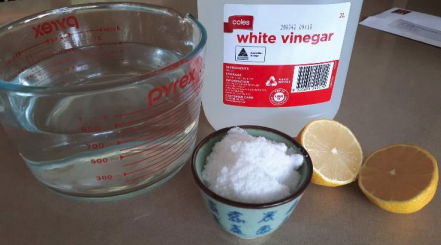
- Brine solution: water, cooking salt, lemon juice, white vinegar
Brine Solution Recipe
Make up 4 parts 10% brine solution (below) to 1 part white vinegar, with a squeeze of lemon to each jar.
(eg if you need 1 litre of solution, use 800ml brine to 200ml vinegar + lemon juice)
Determine the volume of each jar by filling it with water, then measure the capacity. Prepare this solution by calculating 10% of this volume as salt. Add the measured salt to the required amount of water and stir until completely dissolved. Pour into your jar of olives, ensuring they are fully covered.
Method:
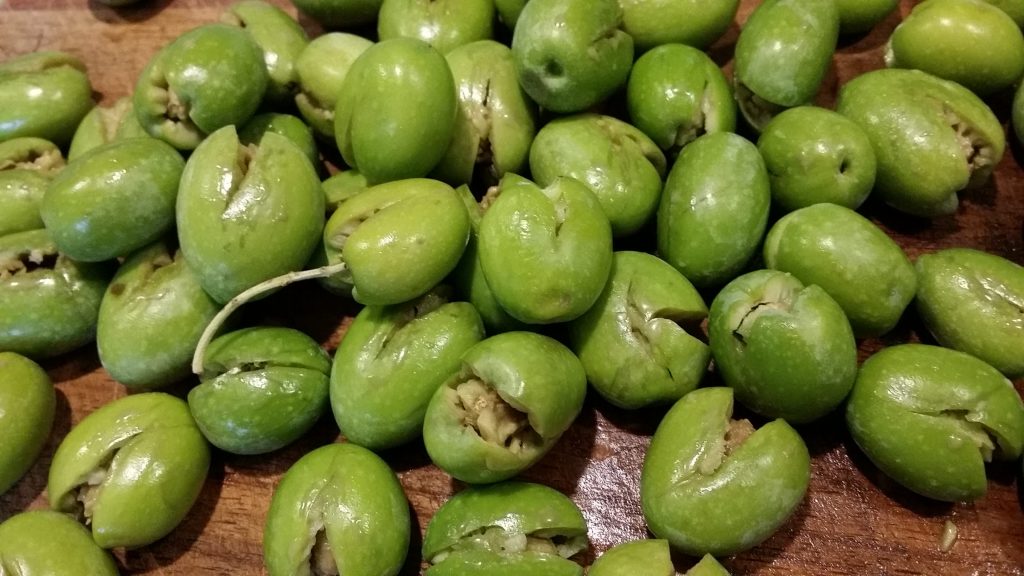
- Wash the firm green olives. With a sharp blow, split each olive, leaving the stone in, and immediately place the split olives into a bowl of water to prevent the olives going brown. Continue until all the olives are cracked. Do not remove the stone.
- Place the olives into your clean jars and calculate how much total brine solution is needed to fill all the jars. Continue to fill the jars with the solution.
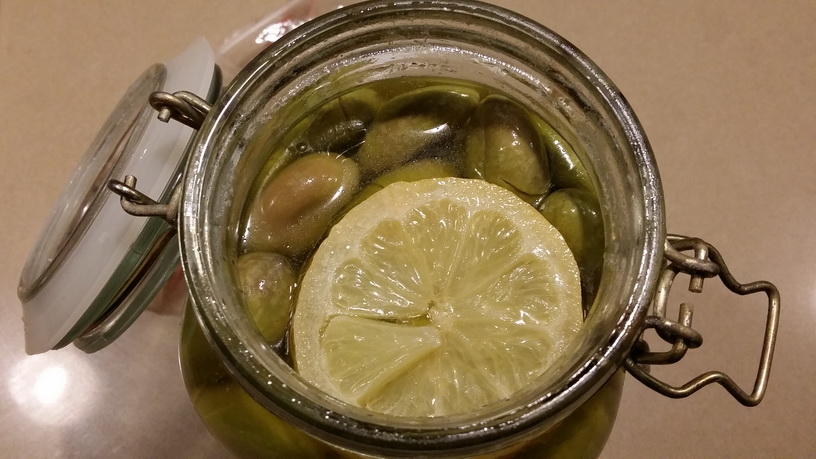
- Put a slice of lemon over the olives to acidify the solution. This also helps to keep the olives submerged.
- Then add a 3-5mm layer of olive oil over the top before sealing the jar. If using a metal lid, even one with a rubber seal, it’s a good idea to create a barrier between the highly salty solution and the metal. To this end, I cut a square of baking paper and place it on top of the jar and then screw the lid in place.
- Store in a cool, dry place, preferably with an old cloth or paper towel underneath. There could be leakage as part of the fermentation process which helps cure the olives.
ESTIMATED TIME TO CURE: Taste the olives after 6 weeks – they should be ready to eat. If still bitter, seal and store once again.
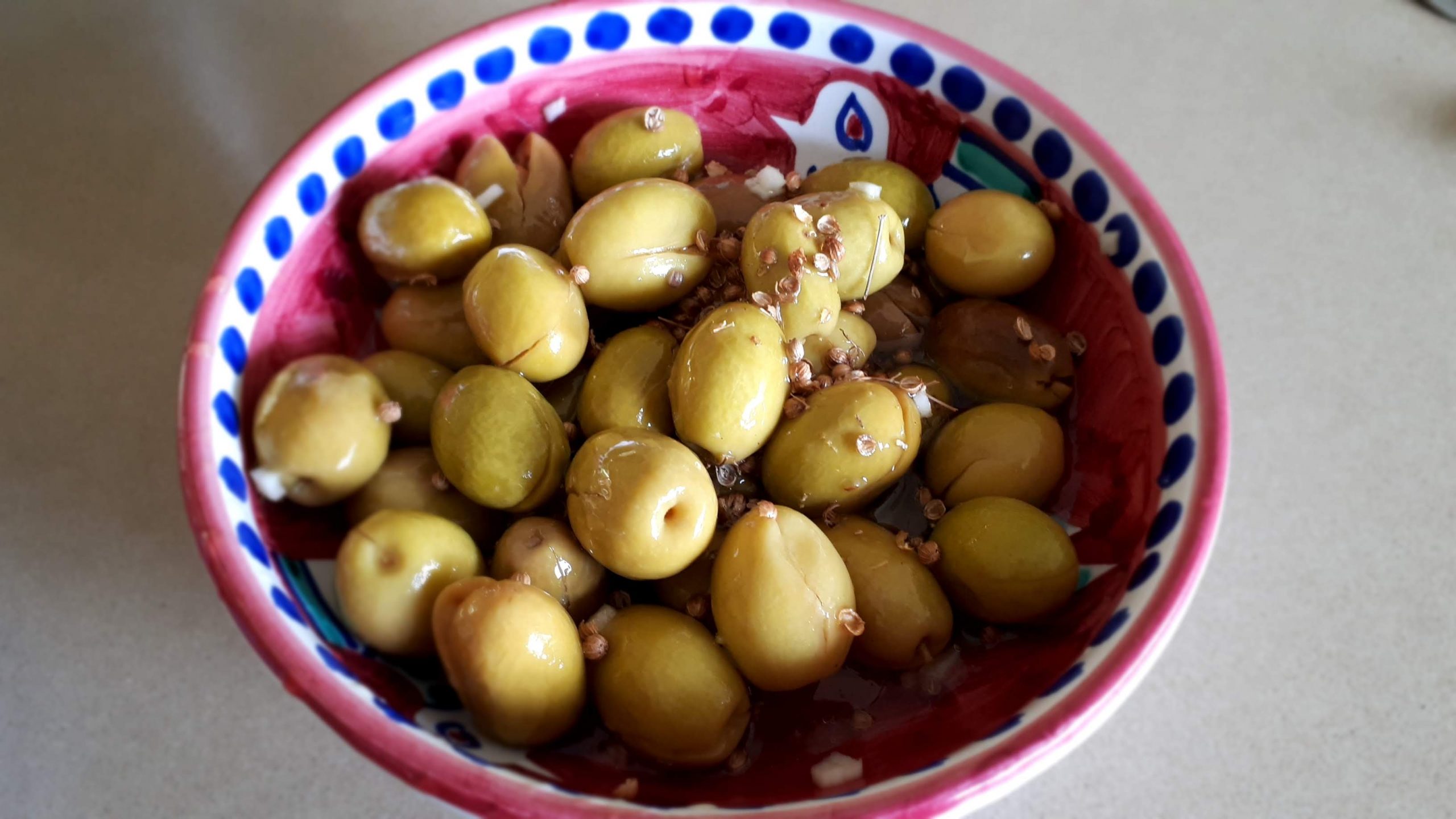
When serving, Mrs Louca dresses them with cracked coriander seeds and smashed garlic cloves and then drizzled with olive oil.