
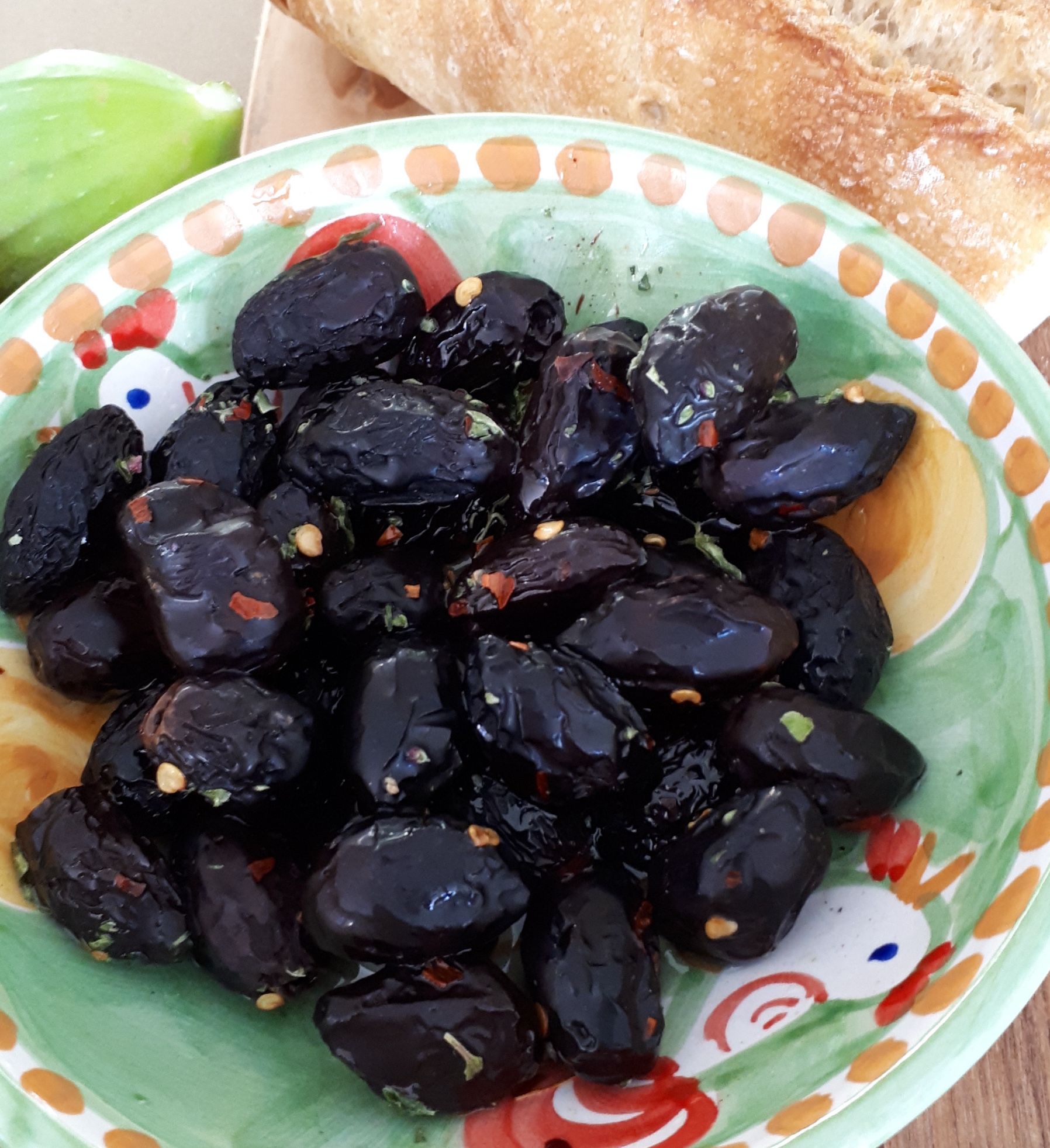
Black Olives – Dry Salting
The taste of these will determine which are the hardcore olive eaters amongst us. Intense in flavour, they go well as part of a slow cooked recipe or served warmed as part of an antipasto platter. Dried olives are not for those who aren’t particularly partial to olives as the flavour is very pronounced. Use any completely black olives that you have and be prepared for a flavour hit!
You will need:
- The olives used here must be completely black, and better to use larger and juicier ones for more flavour. Varieties to try include ripe Spanish Queen or Kalamata olives.
- Salt
Method:
- Weigh the firm, black olives and make a note of the weight. Make a slit in each olive
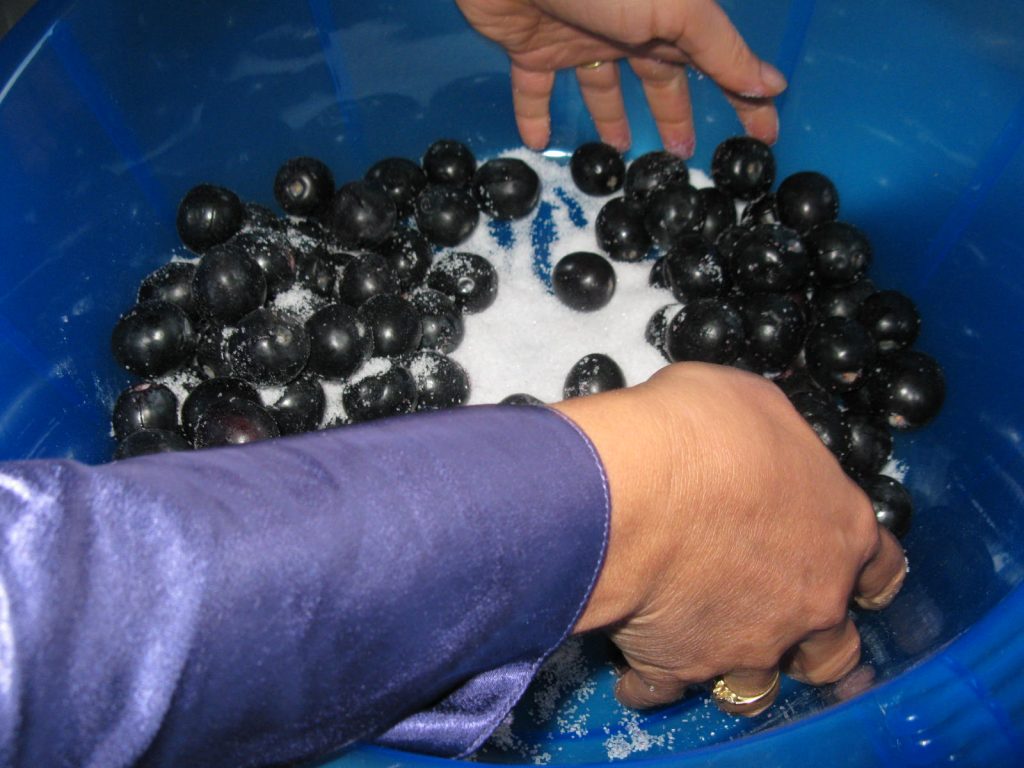
- Place the olives in a plastic tub or ceramic bowl and add 200g of salt per kg of olives to cover generously. Toss through (easiest with your hands) to coat the olives.
- Cover the bowl with a tea towel. You could place a weight over the bowl (eg: sitting a bowl of water on top of bowl of olives) to speed up the process: the juices from the olives will combine with the salt to make a brine.
- For about 3 weeks, repeat tossing the olives every day until the olives have shrivelled and a salty solution is created. Taste occasionally to check the bitterness levels (rinse well before sampling any dry-salted olives!).
- When de-bittered to your taste, rinse off brine briefly, place the olives in a plastic colander and put a weight back over the olives. Allow any brine to drain from this. Leave this for 3-4 days.
- Dry the excess moisture off the olives in an open slow oven or dehydrator, or spread them outside in the sun on a windy day. When dried, lightly toss with olive oil and you can start to eat them; or store them in vacuum sealed bags; in zip lock bags in the freezer, or place in jars covered in oil.
- Serve dressed in olive oil and add any other condiments such as dried oregano, shredded lemon zest or chilli. They have a very intense and salty flavour, and are good added to a slow cooked meat dish, such as a cacciatore style dish, or gently warmed and served as part of an antipasto platter.
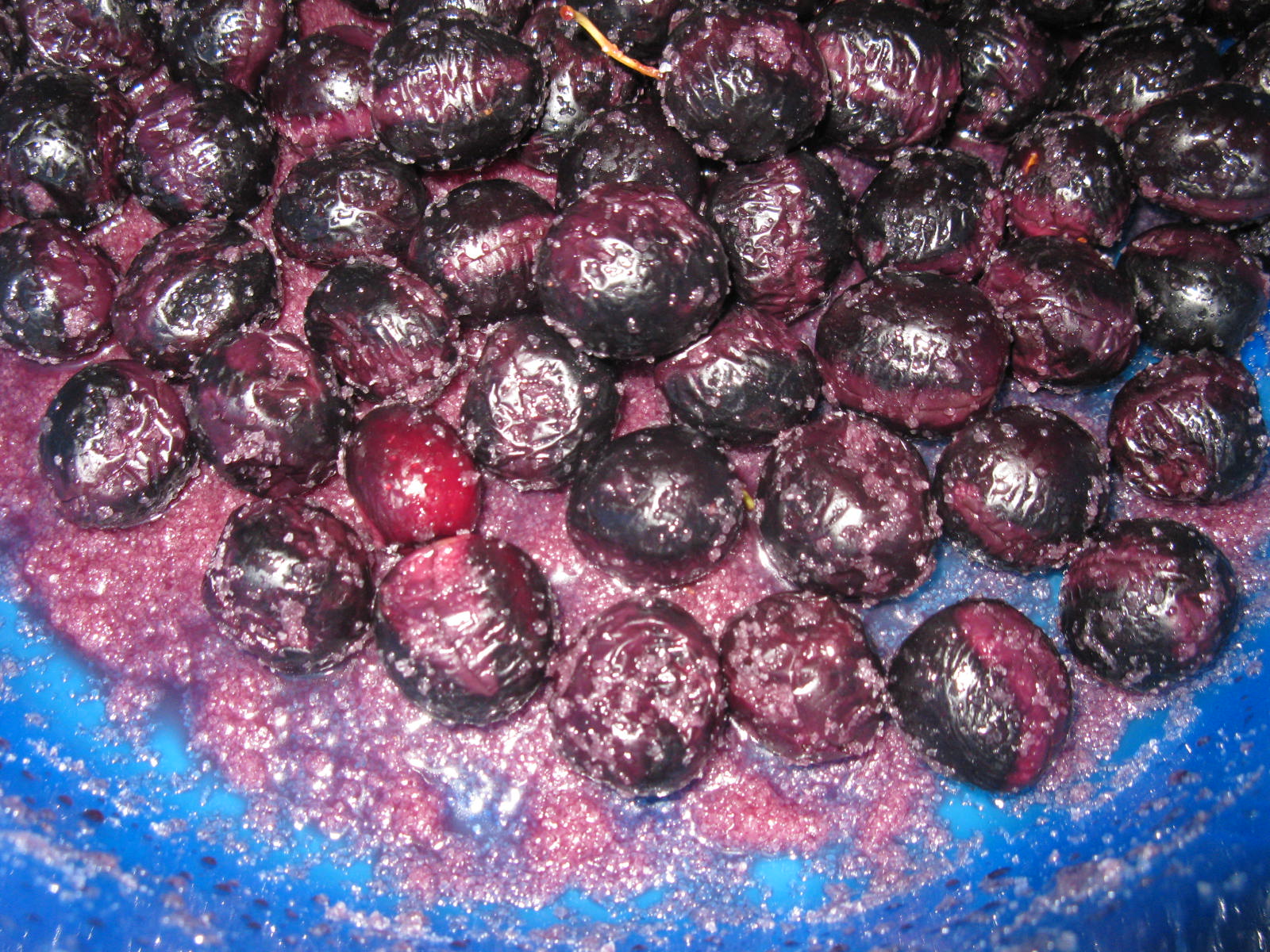
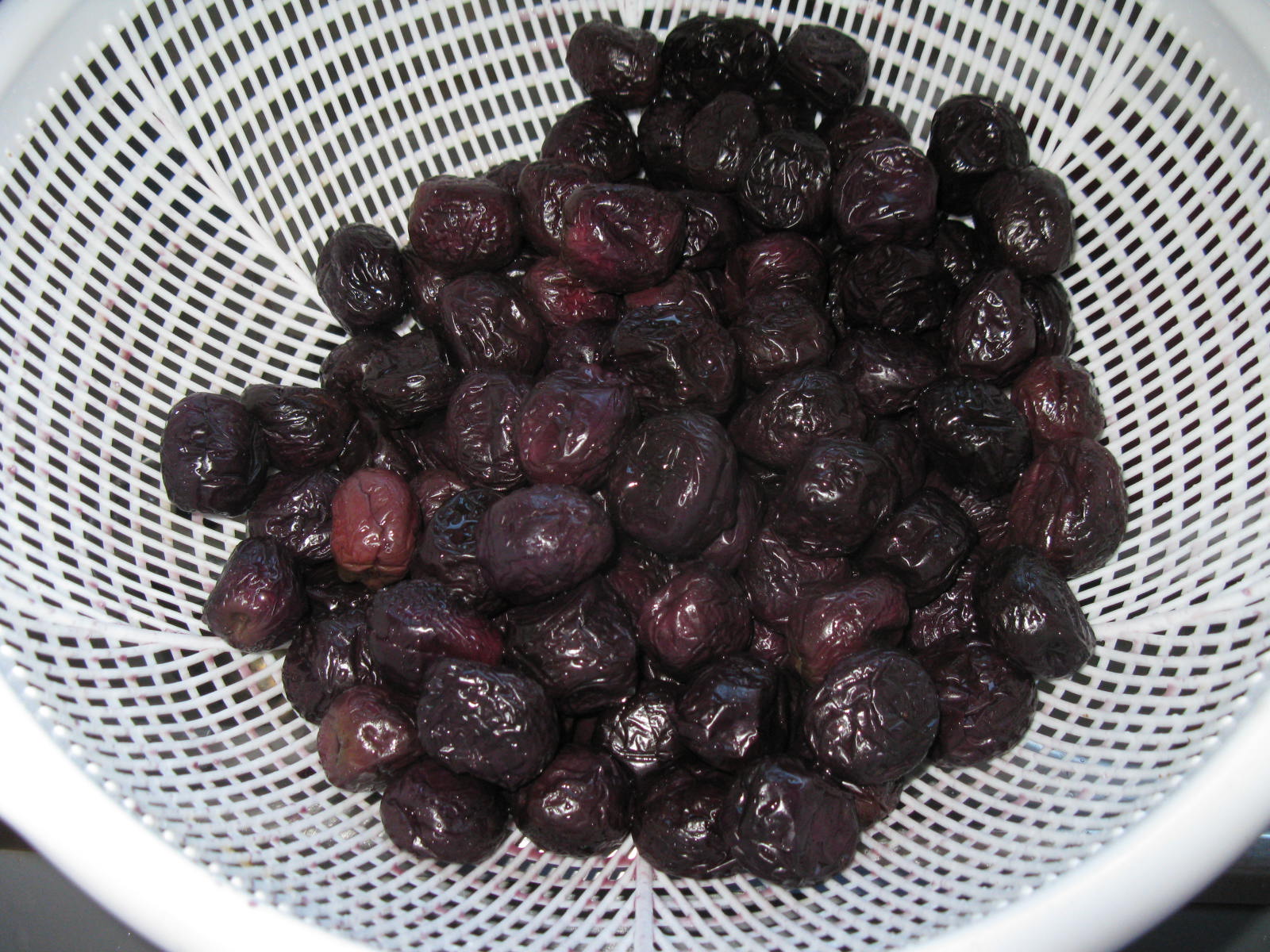
appearance which becomes more
pronounced once they are further
dried in the oven or dehydrator.