
Passata
A long held custom for Italian families over the decades in Australia has become more mainstream with foodies wanting to have greater control over their food production. Tomato Day, Sauce Day, Passata Day – it might be called something different in every family, but it is a day for gathering all generations for the annual passata making tradition.
To the uninitiated who have Italian neighbours, the gatherings of young and old in backyards for a day sometime in February or March could seem quite mysterious. There are cauldrons, smoke, old men barking instructions, younger men lugging around crates and bowls filled with blood red juices, women getting on with the work and the scent of freshly picked basil. If the neighbours poked their heads over the fence, they would see rows and rows of clean bottles being filled and lids fastened, all ready for the final step. Fires are stoked and watched carefully and, at the end of the day, much laughter, food and exhausted merriment as the main work is finished.
This custom of making enough bottles of passata to last until the following year has endured in Australia, even with the passing of the original post war migrants. When they first came to Australia, these preserving traditions were done through necessity. Each season had its own rhythm for these Italians: summer meant the warm season vegetables would be pickled; late summer had the sauce making; autumn was wine, mushrooms and green olives; winter was black olives and salami curing time. Spring was the time to plant all the vegetables that would provide the ingredients for the preserves ahead.
The Process
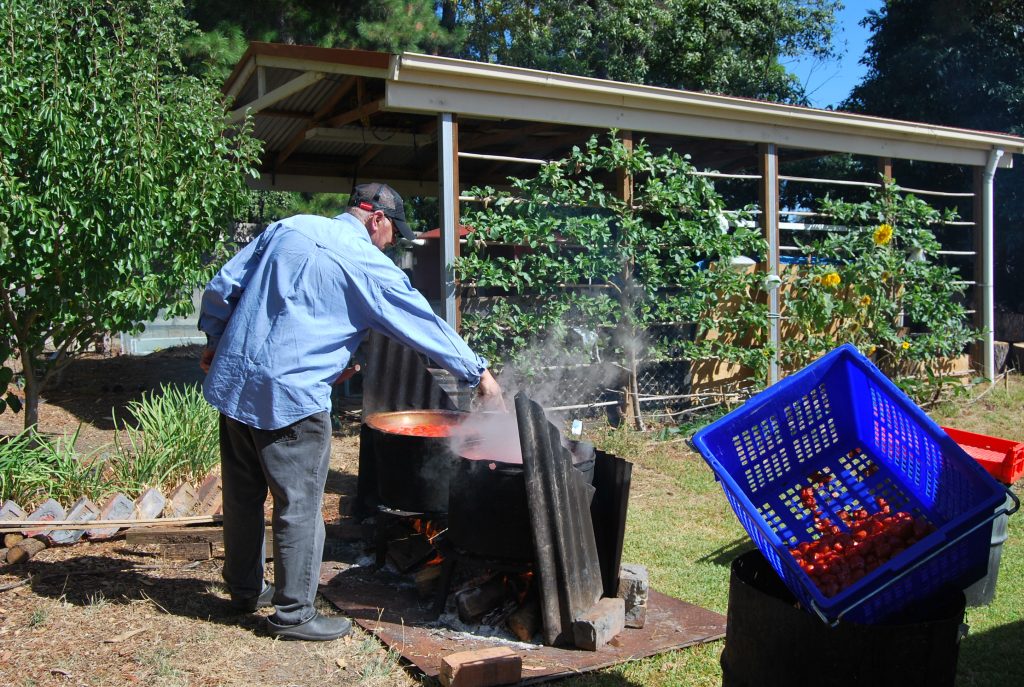
The process of making the passata is basically the same now as it was then, but electric motors have taken a lot of the hard physical labour out of the process. It is simply a matter of squeezing the tomatoes to separate the pulp from the skin and the seeds, bottling the sauce and then preserving the bottles for long-keeping. Different families tweak the process at different stages and this does result in slightly different sauces.
The Tomatoes
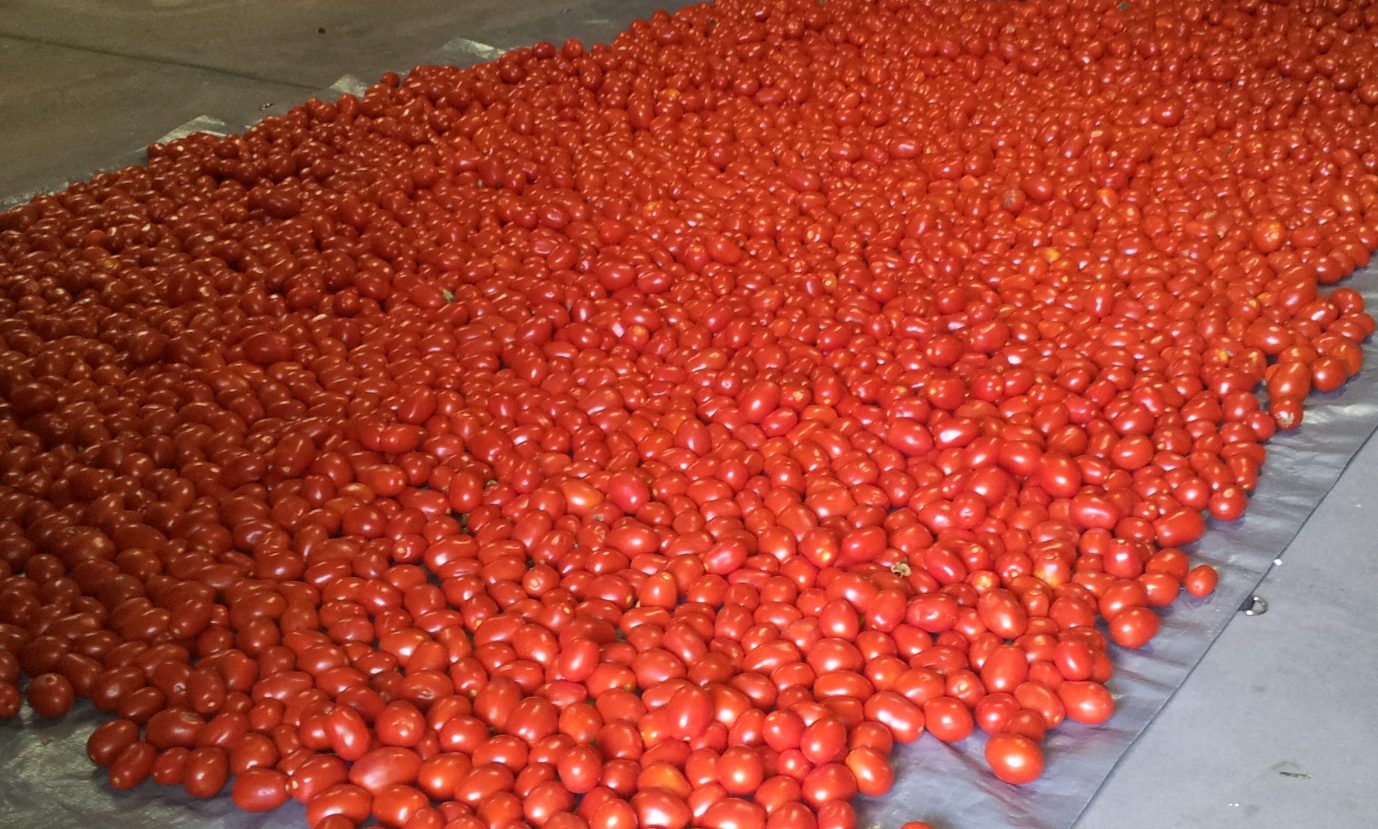
Sauce day might involve dozens of boxes of tomatoes being processed if several families are working together. If the tomatoes weren’t grown in the garden, it would be a visit to one of the many roadside stalls found in areas where Italian households could be found, where the cases of tomatoes were sold off the back of the trucks that had come directly from the farms. If they were bought from a greengrocer it was always prudent to put in an order beforehand to ensure that they were kept for you. The tomatoes were grown especially for this purpose. They still are and are a type of roma or pear-shaped tomato. They are not particularly tasty to eat but are meaty with a lot of pulp, perfect for making thick sauces. Nowadays, tomatoes are still available from February through to April but it is a good idea to order them if you want more than one box at a time.
For backyarders who can grow their own, the sauce day would probably be done in smaller batches over several sessions as the tomatoes ripen.
The Machine
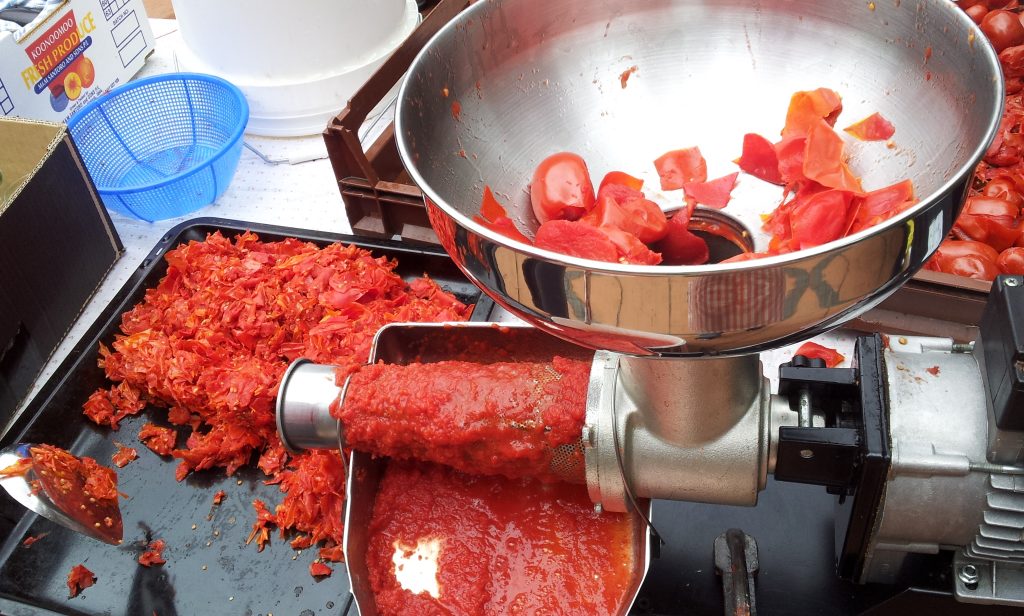
In its simplest form, the machine is like a mouli-mill. This separates the sauce from the seeds and the skins of the tomatoes. This is adequate on a very small scale but a version that can take more tomatoes with less cranking work is preferred by Italians. The spremi-pomodori (translated as the ‘tomato presser’) does just this. There are table-top machines that use manual labour to turn the handle which work fine for small amounts at a time, but for serious quantities, a mechanised version of the spremi-pomodori, with half or one horsepower behind it, makes fast work of the pulp separation. Either version can get quite messy with juice leaking so the sauce making always happens outdoors or in the garage.
The Method (differs from families!)
COLD SQUEEZING THE TOMATOES: The tomatoes are washed, cut into halves or quarters and then processed through the spremi-pomodori machine. The resulting sauce is runny and watery but easy to bottle.
BLANCHING THE TOMATOES: The tomatoes are washed, the stem end where the stalk was attached is removed and then the tomatoes are blanched in a large pot of boiling water. After taken out and drained well, they are processed through the machine. Since a lot of the water is removed during the blanching and the tomatoes are softened somewhat, they pass through the machine easily. The resultant sauce is much thicker. To gauge how many bottles are needed, one box of tomatoes weighs about 17kg and you could be expected to get about 10-12 litres of sauce per box.
Some families skip the step of removing the stem end and only wash the tomatoes before blanching them. They argue that the stem end is removed with the machine anyway so it’s an unnecessary extra step. However, physically picking up each tomato and taking a cut out of the top makes for good quality control as well, so that any rotten parts of suspect tomatoes can be removed before they taint the sauce.
PASSING THE TOMATOES THROUGH THE MACHINE is the fun part where the tomato becomes sauce. The machine separates away the seeds and skin but there is still more useful juice in these discarded parts, so they are put through the machine at least two more times until the final discards are very dry indeed.
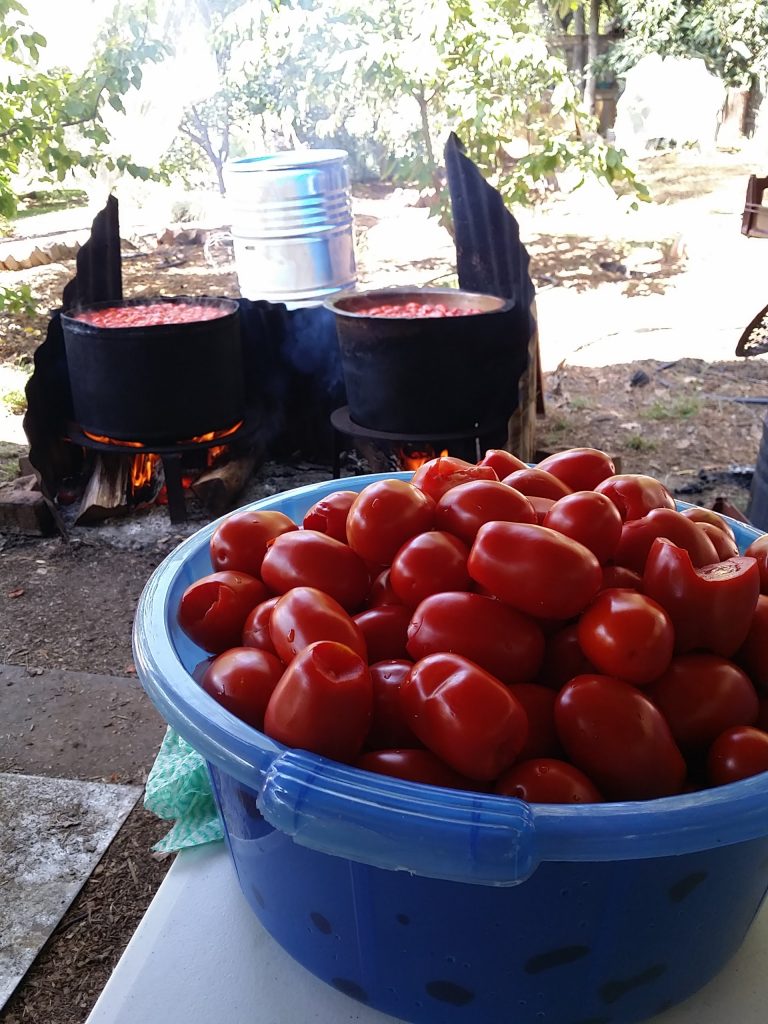
BOTTLING THE SAUCE was once done in long neck beer bottles because they were the only glass bottles that could be collected in large quantities. Now the standard passata bottle can be used from year to year. It holds about 720ml of sauce. While it is a great size to use with a wide opening which makes it easy to fill, any glass jars with metal screw-top lids could be used. As the bottles are filled, a leaf or two of fresh basil is added and then the lids securely attached.
Preserving the Sauce
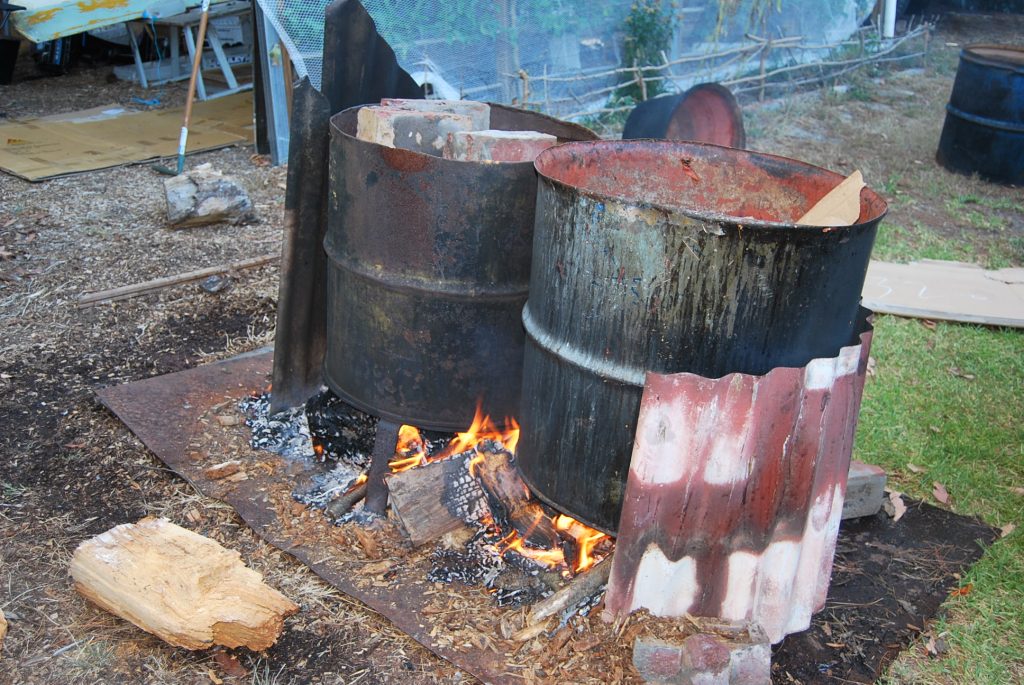
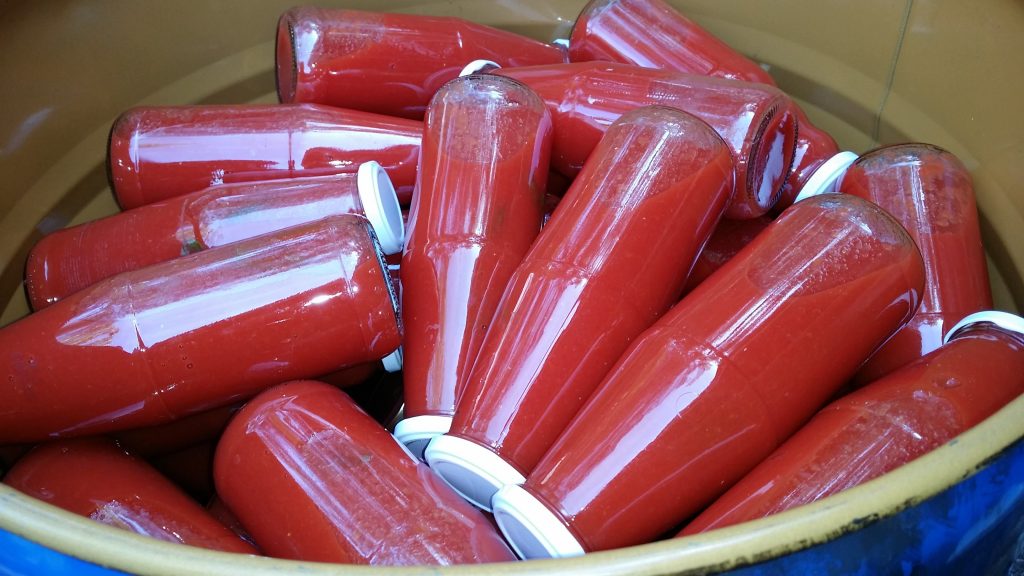
Preserving the sauce is done in a waterbath. It used to be done in 44 gallon drums over open fires. Now most people will use a portable gas ring set under a metal stand to hold the drum and its contents. The preserving can be done on a much smaller scale in the kitchen using a large stockpot but, considering the number of bottles to be heat preserved for a year’s supply, large drums work well to hold the bottles.
After setting the drum in place over the heat source, the base of the drum (or stockpot) should be lined with an old towel (or a thick layer of teatowels) to prevent scorching of the sauce closest to the base; and then the bottles (or jars) are stacked in the drum. The bottles can even be laid on their sides, but it is a good idea to pack them in tightly so that they don’t jiggle and potentially break when the water starts to bubble when heated.
Once the bottles are in, fill up the drum or stockpot with water so that the bottles are covered. In the drum, the bottles are also covered over the top with an old thick towel to keep them submerged. Get the heat source on, whether it be an open fire, gas ring or the stove top. The water is heated slowly until it gets to at least 80 deg C. It needs to be kept at this temperature for at one hour or more to ensure that the preserving process works – that is, all the bottles and their contents have gone through a Pasteurisation process which kills off any bacteria. The heat build-up within the bottle then vacuum-seals the lid after it cools. If the water gets to boiling this is still OK but it will mean that your bottles will jiggle around a lot more in their water bath and might potentially crack against each other.
After the hour at temperature, the water bath is allowed to cool until the next day and then the bottles removed and stored in a cool, dry dark place until they are needed for the base of a delicious pasta sauce!
Sauce Day as a Community Activity
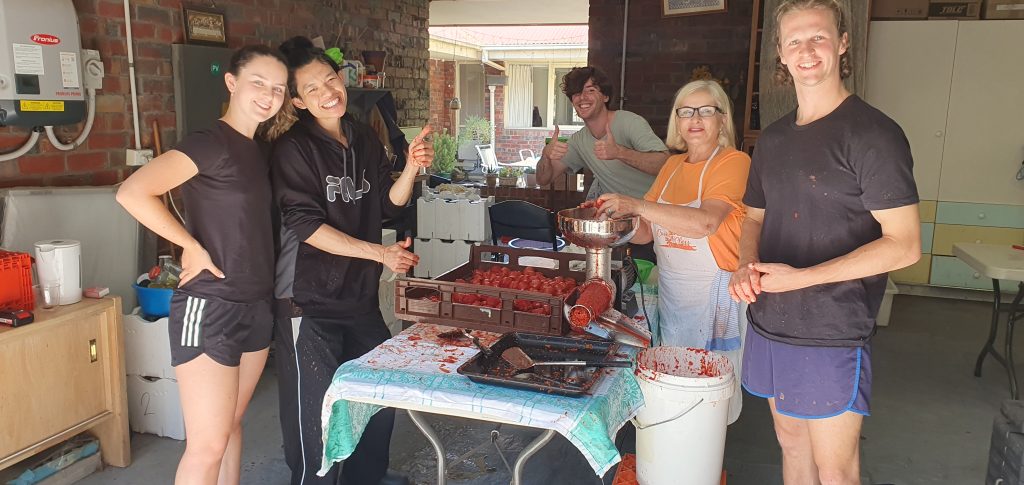
Getting the local community involved in this day is a way of making light work out of a lot of simple repetitive tasks, but it does take some serious organising. The equipment needs to be bought or borrowed, sufficient clean bottles and jars obtained with intact lids (not rusty or bent) and then, most importantly, the tomatoes ordered. When organising this for a lot of people, it is always a relief when the tomatoes have actually arrived and are awaiting processing. Large tubs for washing the tomatoes, access to water, large pots to blanch the tomatoes and then the pots or drums to do the waterbath preserving are also needed. A few need to be in charge of refreshments – morning coffees, making a pasta sauce from some of the freshly made passata for lunch and the supply of cold drinks throughout. Honestly, for those growing up with Italian parents, the annual tomato day wasn’t always a favourite day but it has now become an enjoyable ritual that groups of friends look forward to for a good laugh and annual catch up. And of course, for the satisfaction of having a pantry (or garage) full of bottles to last until the next time.
When Things Go Wrong
- If the preserving isn’t done sufficiently, the contents will ferment with the bacteria multiplying within and the bottles might explode.
- If the lids are faulty, the contents might seep out over time and they will be very smelly as the sauce ferments.
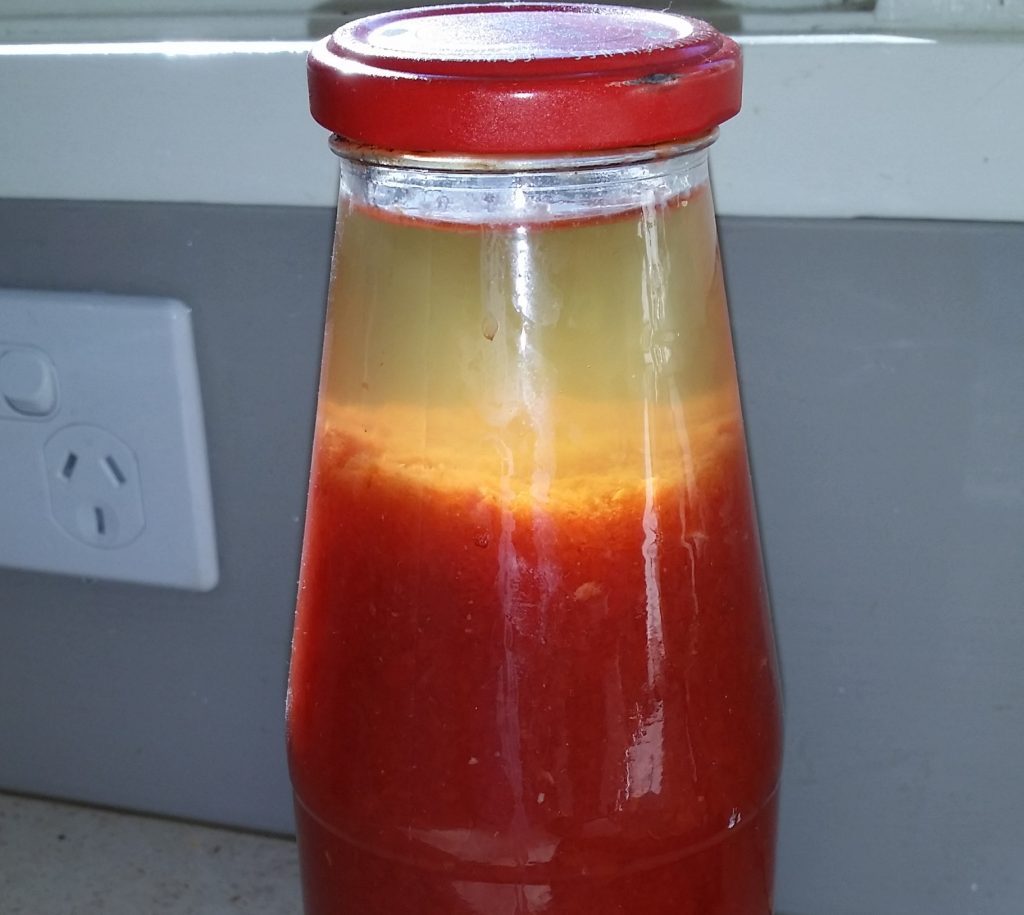
NOTE: if there is water at the bottom of the bottle and pulp at the top, you can remedy this by simply shaking the bottle before use. It is not uncommon when the tomatoes are put through the machine cold (and not pre-cooked).
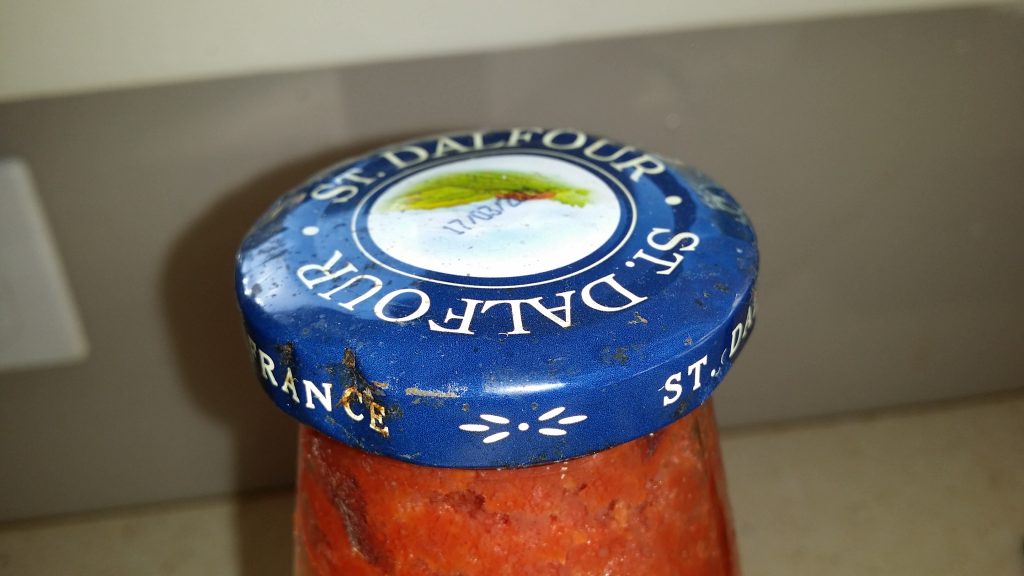
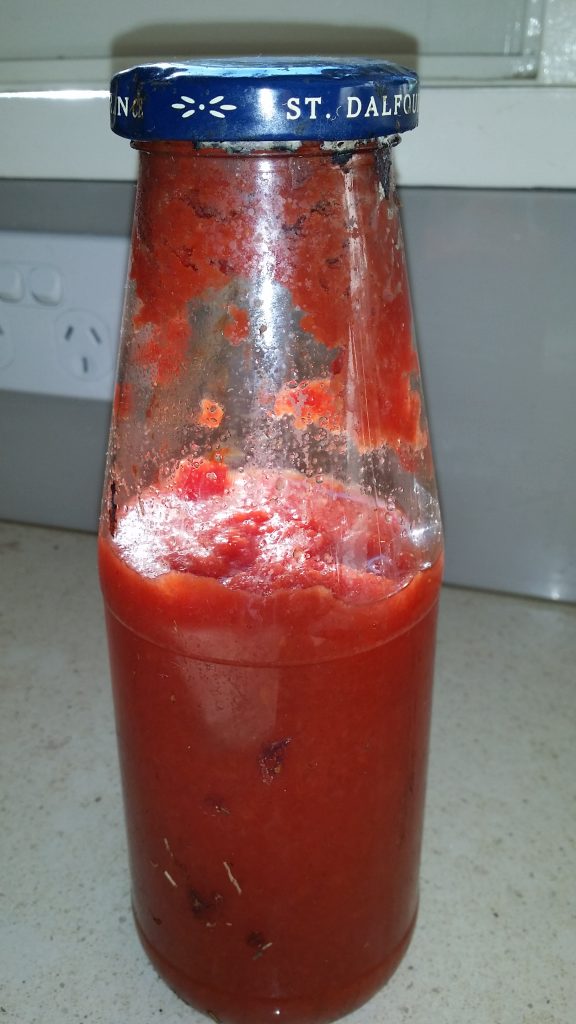
If anyone could shed light on why this happens, please contact me!